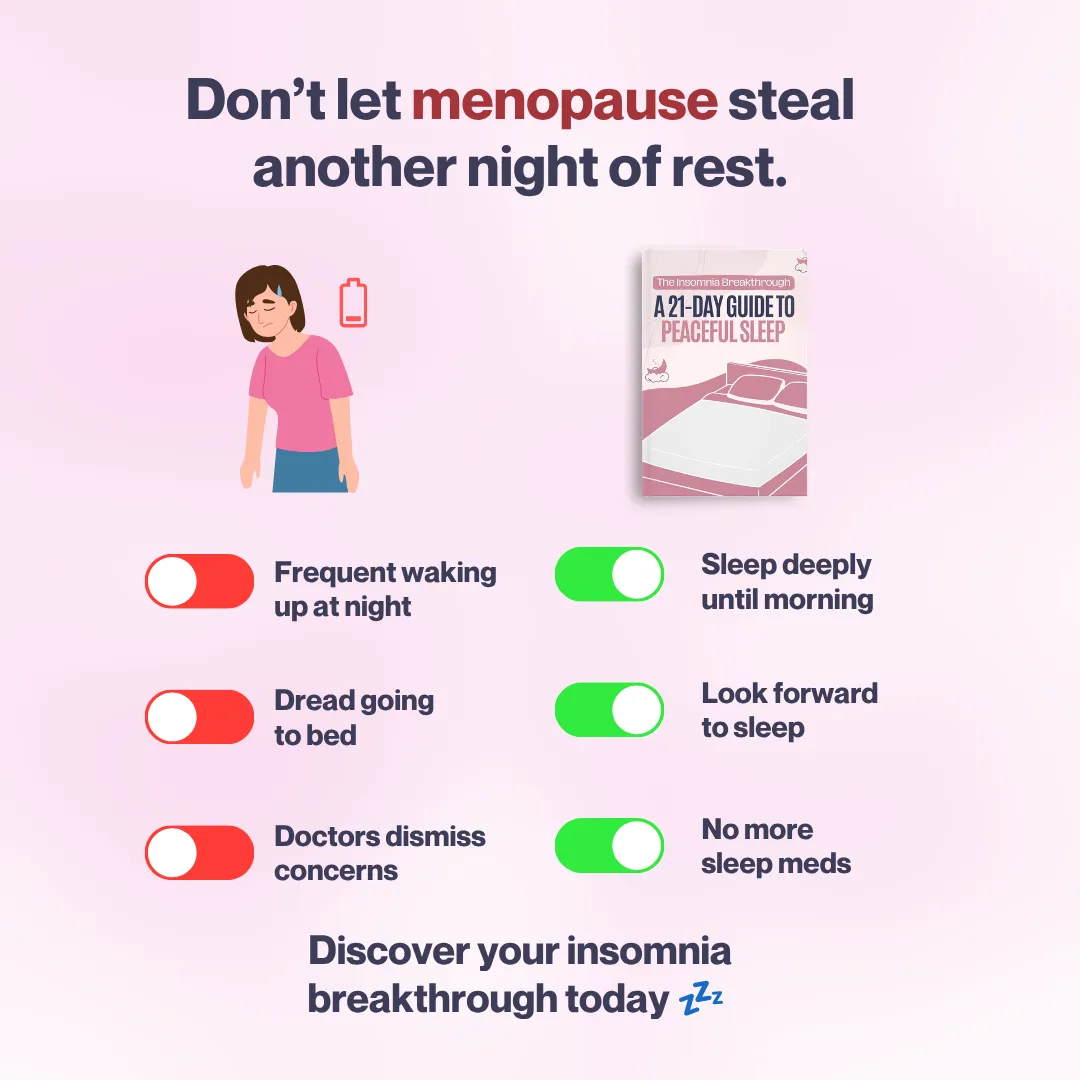







The short answer: Broken sleep during menopause is rarely shaped by one bedtime habit alone. Sleep rhythm, nighttime temperature, stress activation and daytime choices can interact. Progress becomes easier to understand when you stop chasing isolated fixes and start looking at the pattern connecting your days and nights.
You fall asleep tired, only to wake at 3 or 4 AM with your body uncomfortable and your mind suddenly alert. You check the clock, calculate how little time remains before morning and try harder to force yourself back to sleep.
By sunrise, you feel as though the night has happened to you rather than restored you. Work, family, decisions and ordinary conversations require more effort, yet bedtime brings no relief because you are already wondering whether the same thing will happen again.
This is what makes menopause-related sleep disruption so frustrating. The problem is not only the hours you lose. It is the way broken nights begin shaping your energy, patience, confidence and relationship with sleep itself.
The waking is one part of the problem. What happens in your body, mind and routine after you wake can determine whether the disruption settles—or gathers momentum.
Why Can Sleep Feel So Difficult When You Are Already Exhausted?
Feeling exhausted and being ready for sustained sleep are not always the same thing. You can be desperate for rest while your internal timing is inconsistent, your temperature is fluctuating or your nervous system is responding to wakefulness as a threat that needs immediate attention.
Once you wake, a predictable chain can begin. Physical discomfort draws your attention. Checking the time creates urgency. Urgency produces thoughts about tomorrow. Those thoughts make you more alert, and that alertness makes the remaining hours feel increasingly important.
Daytime responses can become part of the same cycle. You may rely on more caffeine, reduce movement because you are tired, nap unexpectedly or go to bed much earlier. Each choice makes sense in the moment, yet the overall rhythm can become harder to read.
A more useful question is not simply, “What can make me sleep tonight?” It is, “Which connected factors are keeping this pattern in place?”
Why Common Sleep Solutions Often Lose Their Power
Supplements Address One Lever at a Time
A supplement may become the entire strategy even when several influences are involved. If timing, temperature, racing thoughts and daytime habits remain unchanged, one addition can feel promising without giving you a clear way to understand the full pattern.
Sleep Apps Arrive After Alertness Has Already Taken Over
A calming recording can be helpful, but searching for the right track at 3 AM may keep you engaged with a device and focused on whether the method is “working.” A relaxation tool is stronger when it belongs to a prepared response rather than an urgent search for rescue.
Going to Bed Earlier Can Create More Time to Be Awake
After a terrible night, an early bedtime feels logical. But spending longer in bed does not automatically create a steadier rhythm or stronger sleep pressure. It can sometimes give worry, clock-watching and frustration a larger place in the evening.
Generic Sleep Hygiene Treats Every Sleepless Night the Same
Advice such as avoiding your phone or drinking something warm can be sensible, but it may feel dismissive when night sweats, changing rhythms and sudden mental alertness are part of the experience. Menopausal sleep needs a broader view than one perfect bedtime routine.
Caffeine Moves the Problem From Morning to Night
Extra caffeine can feel essential when you need to function after broken sleep. The difficulty is that a daytime survival strategy can become part of the night-time pattern, especially when timing and frequency change from one exhausted day to the next.
Four Influences That Can Shape a Menopausal Night
1. Sleep and Hormonal Rhythms
Your body uses repeated timing cues to organise alertness and rest. When sleep and wake times change in response to each difficult night, those cues can become less predictable precisely when you need them most.
2. Nighttime Temperature
Hot flashes and night sweats can turn a comfortable bedroom into a repeated source of wakefulness. Temperature is not merely a comfort detail; it can be part of the sequence that interrupts sleep and triggers alertness.
3. Stress and Nervous-System Activation
A waking can become more disruptive when it immediately produces frustration, problem-solving or fear about tomorrow. The mind starts working at the exact moment you want it to become quieter.
4. Daytime Sleep Pressure
Light, movement, meals, caffeine and the timing of rest all help shape the day-to-night transition. Sleep is a nighttime event supported—or complicated—by choices made many hours earlier.
These influences do not affect every night in the same way. The important shift is learning to see them as a connected system. That makes it easier to identify what needs attention instead of changing several things randomly and never knowing which part helped.
Five Principles for Building a More Supportive Sleep Pattern
1. Treat Sleep as a 24-Hour Pattern
Do not wait until bedtime to think about sleep. Notice how morning light, movement, caffeine, meals, stress and rest interact with the night that follows. This reveals connections that a bedtime-only solution can miss.
2. Build Around Repeatable Anchors
A supportive routine does not require a perfectly controlled day. A few reliable cues can give your body a clearer distinction between active time, winding down and rest—even when work or family life is busy.
3. Separate the Trigger From the Amplifier
A temperature change may trigger a waking, while checking the clock, worrying about tomorrow or reaching for your phone amplifies it. You may not control every trigger, but you can become more deliberate about what happens next.
4. Prepare Your Response Before You Need It
Decisions feel harder in the middle of the night. A simple, pre-decided response reduces the temptation to try five methods at once, search the internet or judge the entire night before it is over.
5. Measure the Pattern, Not One Perfect Night
One disrupted night does not tell you whether a routine is becoming more supportive. Look for changes in bedtime dread, response to waking, morning clarity and consistency across several days. Patterns give you better information than a single score.
A Four-Question Sleep-Pattern Audit You Can Use Today
Before adding another remedy, observe your day and night as one connected pattern. Ask:
- 1. What usually happens in the hour before bed—physically, mentally and environmentally?
- 2. What most often seems to trigger the waking—heat, discomfort, a thought, noise or no obvious event?
- 3. What do you do immediately after waking, and which action makes you feel calmer or more alert?
- 4. Which daytime response to tiredness—extra caffeine, reduced movement, napping or an earlier bedtime—may be changing the next night?
This changes the question from “Why is my body doing this to me?” to “Where does this cycle begin, and which part can I influence first?”
You may notice that difficult nights cluster around inconsistent timing, warmer conditions, high-stress evenings or a particular daytime coping habit. That observation gives you a clearer starting point than changing everything at once.
How to Make Your Routine Easier to Follow
- Choose consistency over complexity. A simple routine you can repeat is more useful than an elaborate plan you abandon when tired.
- Make nighttime comfort easy to adjust. Prepare your environment so temperature changes require as little disruption as possible.
- Reduce clock-driven urgency. Constantly calculating the hours left can turn wakefulness into a countdown.
- Close open mental loops earlier. Give unfinished tasks and tomorrow’s concerns a place before your head reaches the pillow.
- Return to your anchors after a difficult night. One disruption does not require you to redesign your entire routine the next morning.
The purpose is not to control every variable. It is to reduce unnecessary decisions, make your chosen habits easier to repeat and respond to disruption without turning one difficult waking into a complete change of plan.
What Meaningful Progress Can Look Like
If your only measure is “Did I sleep perfectly?”, useful changes can be easy to overlook. A more supportive pattern may first appear as:
- You understand more clearly which factors tend to disturb your nights.
- Bedtime feels less like a test you are afraid to fail.
- You have a calmer, more consistent response when you wake.
- Your daytime choices feel less reactive after a difficult night.
- You can adjust your routine without abandoning it completely.
The wider goal is not to spend your life managing sleep. It is to build enough understanding, structure and confidence that your routine can support you without every night becoming a new investigation.
Frequently Asked Questions
Why Do I Keep Waking at Roughly the Same Time?
Repeated timing can point to a pattern rather than a random failure. Look at the rhythm leading into sleep, temperature changes, what happens immediately after waking and the daytime habits that precede those nights.
Will Going to Bed Earlier Help Me Catch Up?
An earlier bedtime can feel like the obvious answer, but more time in bed is not the same as a steadier sleep pattern. Consider whether the change supports your rhythm or simply creates a longer period for wakefulness and worry.
Can Temperature Really Make Such a Difference?
Temperature changes can be part of both the waking and the alertness that follows. A sleep environment that is easy to adjust can reduce the amount of activity, decision-making and frustration required during the night.
Do I Need to Track Every Detail?
No. Over-monitoring can make sleep feel like another performance task. Focus on a few useful observations: timing, likely triggers, your immediate response and the daytime choices that may connect with the next night.
What If Meditation or Sleep Apps Have Not Helped?
A calming technique is only one part of the picture. It may become more useful when combined with clearer timing, greater nighttime comfort, supportive daytime habits and a prepared response to waking.
Why Use a Structured 21-Day Approach?
A defined period gives you a sequence to follow instead of changing strategies whenever a night feels difficult. It creates room to observe your pattern, introduce purposeful changes and begin building a routine you understand.
What If I Have Already Tried Everything?
You may have tried many individual remedies without seeing how the factors connect. The next step is not necessarily adding another isolated solution; it may be organising the right strategies around your actual pattern and applying them in a clearer order.
One Helpful Change Can Ease a Night. A Complete System Connects the Whole Pattern.
If you are tired of cycling through supplements, sleep apps and generic advice, the missing piece may not be effort. It may be having a clear order for understanding your sleep rhythm, nighttime temperature, stress response and daytime habits together.
The Insomnia Breakthrough provides a structured 21-day, menopause-specific system for identifying your sleep disruptors, making purposeful changes and building a calmer, more consistent routine—without leaving you to assemble the entire plan from disconnected tips.
EXPLORE THE INSOMNIA BREAKTHROUGH