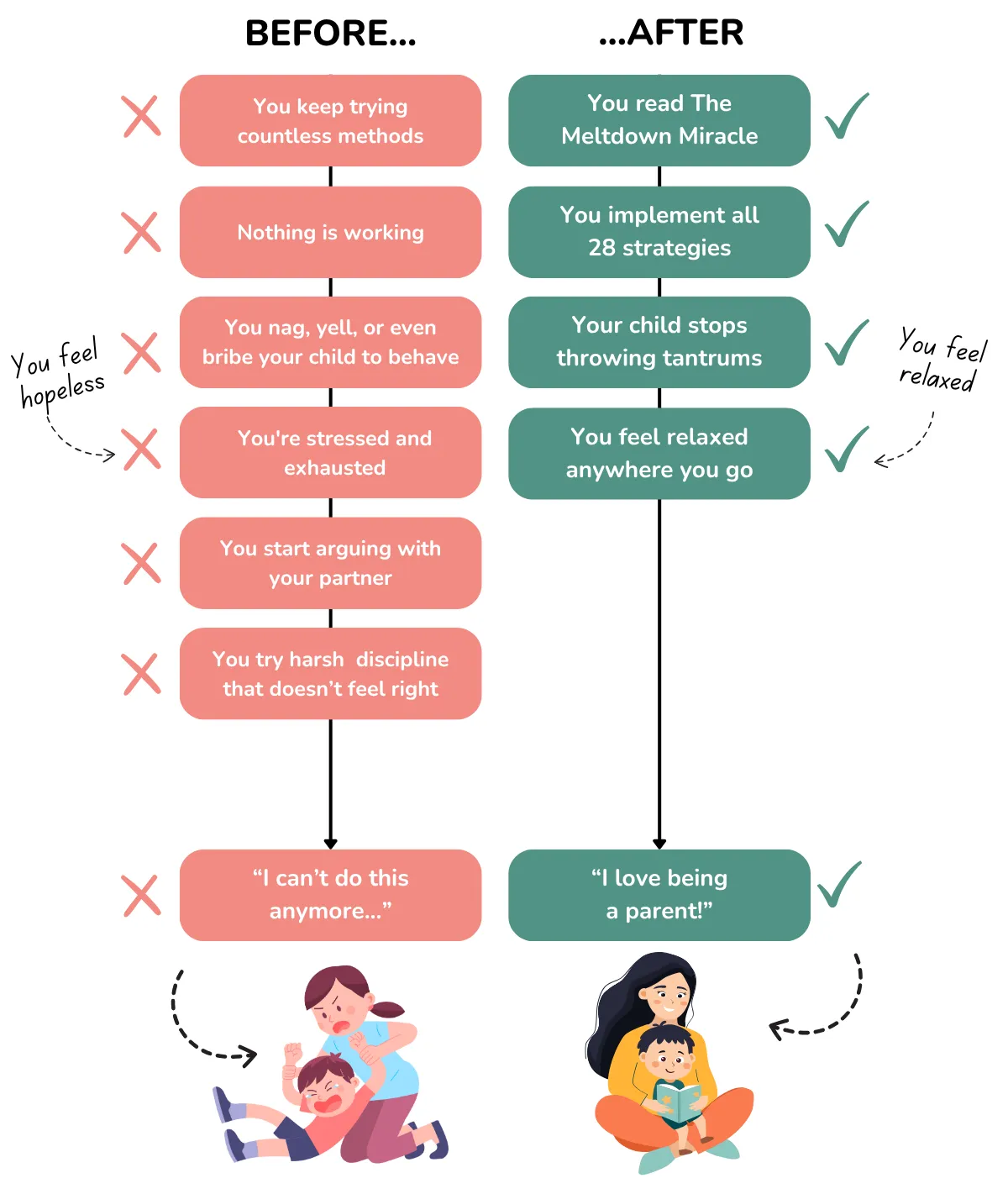
For parents of spirited, sensitive or strong-willed toddlers primarily aged 2–5, an ordinary day can feel like a series of emotional tripwires: the wrong cup, a delayed snack, a screen being turned off or the moment it is time to leave the playground.
The trigger may look tiny to an adult. To a tired, hungry, frustrated or overstimulated young child, it can feel enormous. Once emotions take over, you are suddenly trying to keep everyone safe, hold a boundary and manage your own rising stress at the same time.
It is easy to interpret the outburst as stubbornness or deliberate defiance. Yet toddlers are still learning how to wait, move through transitions, name feelings, tolerate frustration and recover from disappointment. The louder the behaviour becomes, the easier it is to miss the developing skills underneath it.
“Why does every simple request become a battle—and why do all my usual strategies stop working when I need them most?”
The aim is not to remove every difficult feeling. It is to respond in a way that protects safety, preserves the limit and gives your child a better opportunity to learn once calm returns.
Why common approaches often fail in the hardest moment
Most parents are not short of effort. They have explained, distracted, warned, rewarded and negotiated—often while exhausted and under pressure. The problem is that a strategy can be reasonable at the wrong time and still fail to reach an overwhelmed child.
Four familiar responses can accidentally keep the struggle moving:
1
Reasoning at the emotional peak
A long explanation requires attention and self-control—the very abilities that may be least available during intense distress.
2
Adding more warnings
Repeating instructions can add noise and pressure when your toddler already has more stimulation than they can manage.
3
Giving in for immediate peace
Ending the conflict may bring short-term relief, but it can leave you uncertain about how to hold the same boundary next time.
4
Using one script for every trigger
Hunger, sensory overload, frustration and transitions are different problems. One automatic response cannot fit every situation.
A useful response considers timing, context and what the moment requires. That does not mean abandoning boundaries. It means choosing an approach your toddler has a chance of receiving.
Regulation comes before the lesson
When a toddler is overwhelmed, the immediate task is different from the later teaching task. Trying to correct the behaviour, explain the rule and discuss better choices all at once can make the moment heavier for everyone.
Separate the boundary from the battle
You can acknowledge the feeling without changing the limit. “You are upset that playtime is finished” and “It is still time to leave” can both be true.
Connection supports the child through the feeling. The boundary keeps the situation clear.
1. Look for context
Behaviour rarely happens in a vacuum. Hunger, tiredness, overstimulation, frustration, a sudden change or a need for connection can reduce what a young child can manage. Noticing context helps you respond to the real pressure point instead of treating every outburst as the same kind of defiance.
2. Make the moment simpler
During high emotion, fewer words are often more useful than a detailed explanation. A steady tone, a clear limit and reduced stimulation can make the situation easier to navigate while you focus on safety.
3. Teach when calm returns
Naming the feeling, practising another response and talking about what happened become more meaningful when your toddler can participate. The lesson is not lost because you delayed it; the timing may be what finally allows it to land.
Five calmer shifts you can begin practising
You do not need to solve every tantrum today. Begin by changing the quality of your next response.
-
Notice the build-up
Watch for the early signs that hunger, tiredness, frustration or stimulation is beginning to exceed what your toddler can manage.
-
Lower the amount of language
Replace repeated explanations with a short, clear message your child can process more easily during distress.
-
Keep one boundary clear
Avoid adding extra threats or consequences in the heat of the moment. Focus on the safety or behaviour limit that actually matters.
-
Stay present without surrendering
Offer steadiness and connection while allowing the boundary to remain intact. Support does not require giving your child the answer they wanted.
-
Return to the skill later
After calm returns, use simple emotional language, reconnect and practise what could help during a similar moment next time.
Prepare for the flashpoints you can already predict
Many meltdowns feel sudden, but the surrounding pattern is often familiar. Perhaps leaving the house is hardest when everyone is rushed. Screen transitions may be more difficult late in the day. A public outing may unravel after a missed snack or an unexpected wait.
Preparation cannot remove every strong reaction, but it can reduce avoidable pressure and help you decide how you want to respond before your own stress rises.
Before a predictable pressure point, ask:
- What usually happens immediately before the reaction?
- Is hunger, tiredness, frustration or overstimulation likely?
- Would a clear transition warning make the change easier to understand?
- Can I reduce noise, waiting or unnecessary decisions?
- Which boundary needs to remain clear if emotions rise?
The goal is not to organise family life around avoiding every feeling. It is to remove preventable friction, communicate what is coming and enter the moment with a plan instead of panic.
Connection and firm limits are not opposites
Parents are often pushed towards two extremes: become stricter until the child complies, or become so accommodating that every limit is negotiable. Neither extreme captures what many intense moments actually need.
A connected boundary recognises the child’s experience while remaining clear about safety and behaviour. You can understand why your toddler is furious and still prevent hitting. You can comfort disappointment and still turn off the screen. You can stay close and still leave the playground.
Calm is not the same as permissive
Calm means the adult response does not add unnecessary heat. The limit can remain firm, simple and predictable while your child receives help moving through the feeling it created.
This balance matters because toddlers learn from both parts of the experience: the dependable boundary and the relationship that remains available while they struggle with it.
Notice progress before the tantrums disappear
If your only measure of progress is “no more meltdowns,” you may overlook meaningful changes in how your family moves through them. Early wins are often quieter than the behaviour that made you search for help.
Useful signs of progress can include:
- You recognise a trigger before emotions reach their peak
- You use fewer words instead of entering a long argument
- You hold a screen, safety or transition boundary without adding threats
- Your toddler begins hearing simple words for the feeling after calm returns
- You repair the connection after losing your patience
- Caregivers respond with greater consistency
These shifts matter because they replace helplessness with information. Each difficult moment shows you more about your child’s triggers, your own reactions and which kind of support fits the situation.
The order of your response matters
In a stressful moment, parents often try to recognise the problem, calm the behaviour, enforce the rule and teach the lesson simultaneously. A sequence makes those responsibilities easier to separate.
The core idea behind Spot → Steady → Teach is that each task has its own timing. First, consider what may be driving the reaction. Next, bring safety and steadiness to the immediate moment. Then return to connection, language and practice when learning becomes possible again.
The value is not in memorising one perfect sentence. It is in knowing which kind of response the moment calls for. That is especially important when different triggers, settings and temperaments make a single script unreliable.
A complete plan can take this principle further by helping you recognise patterns, choose between different strategies and build a response that remains usable at home, in public and across caregivers.
A practical playbook replaces “What do I do now?”
Understanding toddler behaviour is helpful, but insight alone can disappear when you are tired, watched by strangers or already frustrated. Structure turns that understanding into a response you can return to under pressure.
A useful plan connects prevention, co-regulation, communication, transitions, boundaries and repair. It also helps you adapt rather than assume the same technique should work for every child and every outburst.
That is how family life begins to feel less like a countdown to the next explosion and more like a series of moments you know how to read, steady and learn from.