






Strength and fitness for women over 40
If you are exercising regularly but still feel softer, weaker and more tired than before, your body may not need more punishment. It may need a smarter combination of strength training, protein, progression and recovery.
There is a particular kind of frustration that comes from doing everything you have been told is “right” and watching your body respond as though none of it matters.
You complete the workouts. You add more cardio. You try to eat less. You push through the days when your energy disappears by mid-afternoon—and yet your muscle tone continues to fade, stubborn weight refuses to shift and every session seems to require more effort.
Eventually, you may begin to wonder whether this is simply what happens after 40. Perhaps feeling soft, tired and disconnected from your own body is something you are expected to accept.
“Why am I working so hard and still feeling softer, weaker and more tired?”
The problem is not necessarily a lack of discipline. You may simply have outgrown the training and dieting rules that worked for you years ago.
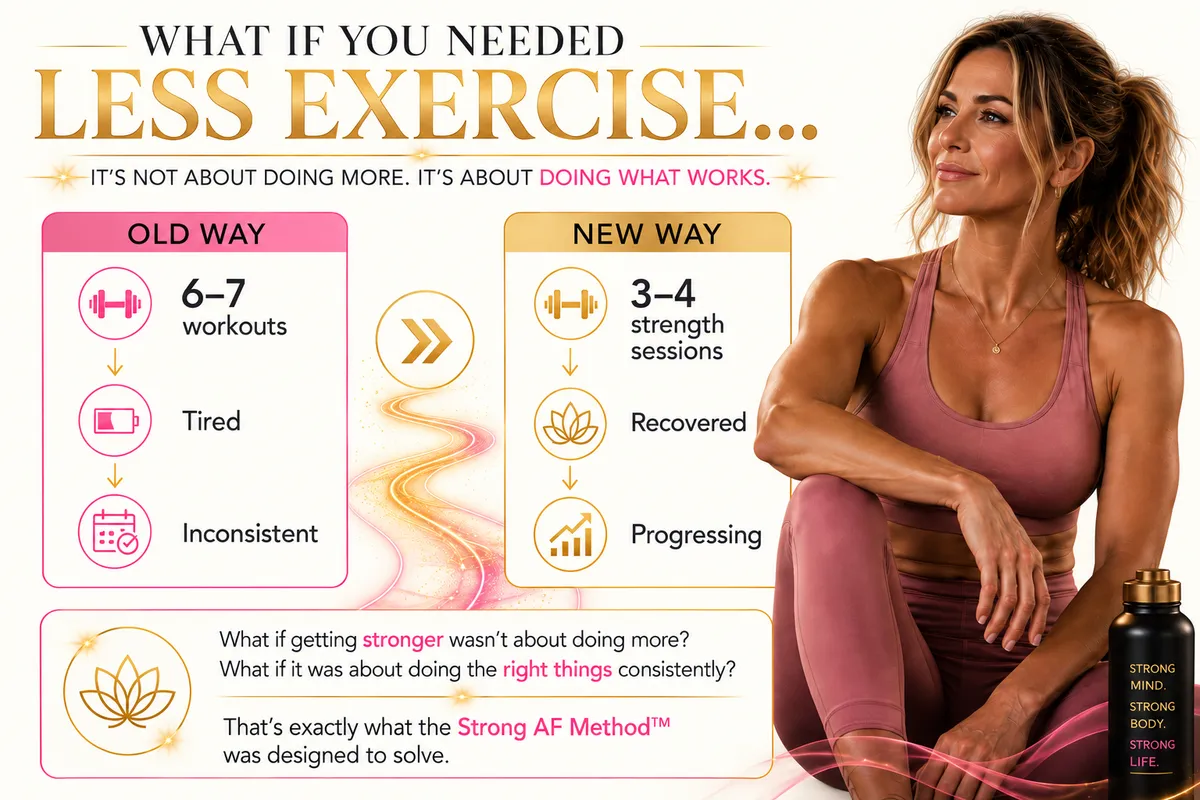
Building muscle after 40 is still possible. But it is rarely achieved by endlessly adding more exercise, cutting more food or judging the success of a workout by how exhausted it makes you feel.
Why working harder can stop working
Many women respond to unwanted physical changes by increasing the very things that are already draining them. When results slow down, the natural reaction is to assume that more effort must be the answer.
That can create an exhausting cycle: longer workouts, less food, poor recovery, disappointing progress and even more pressure to push harder.
More cardio
Cardio can support health and fitness, but adding more of it does not automatically provide the progressive resistance your muscles need to become stronger.
Less food
Constant restriction can leave you trying to train without enough nutritional support for energy, repair and consistent performance.
Random intensity
A workout can feel difficult without creating a clear progression. Sweating more is not the same as building strength strategically.
Insufficient recovery
Training creates the challenge, but recovery is where your body gets the opportunity to respond to that challenge.
None of this means you should stop exercising or avoid effort. It means your effort needs a purpose. The goal is not to finish every workout feeling destroyed. The goal is to give your body a useful reason to adapt—and enough support to do it.
The three things your muscles actually need
Muscle-building is not created by one perfect exercise or a punishing fitness challenge. It comes from a repeatable relationship between training, nutrition and recovery.
Think of it as a three-part conversation with your body
Strength training sends the signal. Protein and adequate nutrition provide building materials. Recovery gives your body the opportunity to respond.
If one part is consistently missing, adding more intensity to another part may simply create more fatigue.
1. A meaningful strength stimulus
Your muscles need resistance that is challenging enough to encourage adaptation. That does not mean lifting recklessly or using the heaviest weight in the room. It means choosing resistance that requires genuine effort while allowing you to maintain control and sound technique.
Repeating the same comfortable exercises with the same weights may maintain familiarity, but it gives your body little reason to become stronger. Progress requires a challenge that develops gradually.
2. Enough protein and nutritional support
Protein is more than a fitness trend. It supplies amino acids that support the repair and maintenance of muscle tissue. Yet many women focus so heavily on eating less that they overlook whether their meals are adequately supporting their training.
You do not need to live on plain chicken and broccoli. A practical protein strategy should fit your preferences, schedule and normal meals well enough to be repeated consistently.
3. Recovery that is treated as part of the plan
Rest is not evidence that you are lazy or losing momentum. It is part of productive training. When every workout is long, punishing or performed on top of unresolved fatigue, it becomes difficult to return with the energy needed to progress.
A strong plan considers the whole week—not just what happens during one workout. Training days, rest periods, sleep, stress and ordinary life all affect how prepared you feel for the next session.
Five smarter shifts for building strength after 40
You do not need to overhaul your entire life overnight. Start by changing the way you evaluate your training.
- Make resistance training the foundation Use purposeful strength work as the main signal for maintaining and building muscle instead of relying on cardio to reshape your body.
- Track progress instead of chasing exhaustion Notice whether your technique, control, repetitions or resistance are improving. Progress is more useful than simply feeling tired.
- Include protein across your day Build meals around reliable protein sources rather than trying to correct an inconsistent day with one unusually large serving.
- Keep workouts focused Longer is not automatically better. A structured session with clear priorities can be more productive than spending hours moving from one random exercise to another.
- Adjust before fatigue becomes a collapse Pay attention to performance, soreness, sleep and motivation. Strategic adjustments can protect consistency without turning every difficult week into a complete restart.
What progressive strength training really means
Progressive training is often misunderstood as adding more weight at every workout. That is only one possible form of progression.
You may also progress by improving your technique, completing a movement with greater control, performing another quality repetition or using a slightly more challenging variation. The important point is that the training develops intentionally rather than remaining permanently comfortable or changing randomly each week.
This is where many generic workout plans fall short. They provide exercises, but not always a clear method for knowing when to increase the challenge, when to maintain it or when recovery needs more attention.
A productive workout should leave you able to answer:
- What was I training today?
- What level of resistance did I use?
- Was my form controlled and repeatable?
- How did this compare with my previous session?
- What is the most sensible next progression?
When you can answer those questions, training becomes less emotional and more measurable. You no longer need to decide whether a workout “counted” based on how sweaty, sore or depleted you felt afterward.
The difference between being active and building muscle
Walking, fitness classes and recreational movement can all have a valuable place in an active life. But being active and following a muscle-building plan are not exactly the same thing.
A muscle-building plan has direction. It includes movements chosen for a reason, an appropriate starting point, a way to measure progress and enough recovery to support the next stage.
Random activity can make you feel busy. Structure helps you understand what you are building.
The goal is not to do everything
The goal is to do the right work consistently enough for your body to respond. A sustainable plan should help you become more capable—not make fitness feel like a second full-time job.
How to recognise progress before the mirror catches up
Physical changes can take time to become obvious, which is why relying only on the mirror or scale can make a useful plan feel ineffective too soon.
Early signs that your approach may be moving in the right direction include:
- Exercises beginning to feel more controlled and familiar
- Using greater resistance without losing your form
- Completing daily activities with more confidence
- Recovering more predictably between sessions
- Feeling less intimidated by strength training
- Approaching workouts with a clear purpose instead of guesswork
These improvements matter because they create the foundation for visible change. Strength is built through repeated evidence that your body can handle a little more—not through one heroic workout followed by days of exhaustion.
When your body feels unfamiliar, structure restores trust
One of the hardest parts of physical change after 40 is not simply losing muscle tone or experiencing lower energy. It is the feeling that your body has become unpredictable.
You may no longer know which advice to trust. One source tells you to train harder. Another tells you to eat less. Another insists that one exercise, food or morning routine is the missing answer.
A clear system removes some of that noise. It gives each part of your routine a role: resistance provides the stimulus, progression develops the stimulus, protein supports the work and recovery helps you return ready to continue.
That is how confidence begins to return. Not because you are trying to become the woman you were in your 20s or 30s, but because you are learning how to train effectively for the woman you are now.
You are not broken—you may simply need a better plan
If your current routine leaves you exhausted without helping you feel stronger, the answer is not automatically more willpower.
You may need a clearer starting point, a progression strategy you can recover from, practical guidance for supporting muscle and a weekly structure that works with your real energy and responsibilities.
Once those pieces begin working together, exercise stops feeling like punishment for a changing body. It becomes a way to rebuild strength, capability and trust in yourself.