












Why Your Mind Goes Blank When Speaking—and How to Keep Going Under Pressure
Written by I AM EXPANSION Editorial Team
Published September 2026

The short answer: Your mind can go blank because speaking under pressure divides your attention between your message, your physical symptoms and the fear of being judged. Clearer speaking becomes easier when you learn to settle the alarm response, organise your ideas simply and prepare for recovery instead of demanding perfect performance.
You knew exactly what you wanted to say before the meeting began. Then someone asked for your opinion, every face turned towards you and the idea that felt clear a moment ago seemed to vanish. Your heart sped up, your voice changed and the silence felt much longer than it really was.
Afterwards, the words often return. You replay the moment and think of the answer you wish you had given. That can make the experience feel like a failure of intelligence or confidence, even though the problem appeared only when pressure entered the room.
The same pattern can appear in presentations, interviews, introductions, school events, networking conversations or an unexpected question. The setting changes, but the frustrating gap remains: you have something valuable to communicate, yet anxiety interrupts your access to it.
A mental blank does not mean you have nothing to say. It often means your attention has been pulled away from your message and towards a perceived threat.
Why Does Speaking Anxiety Make Clear Thinking Harder?
When all eyes turn towards you, your brain may interpret attention, uncertainty and evaluation as danger. The body prepares to protect you: your heart races, breathing becomes shallow, muscles tighten and your awareness narrows towards anything that might signal embarrassment or rejection.
At the same time, part of your attention starts monitoring your performance. Do I look nervous? Is my voice shaking? What if I forget the next point? That inner commentary competes with the thinking space you need to remember, organise and express your ideas.
Trying to force the symptoms away can add another layer of pressure. Now you are not only delivering a message; you are also checking your heartbeat, correcting every sentence and looking for signs that other people have noticed your discomfort.
A more useful goal is not to prove that you feel absolutely no nerves. It is to make the speaking task easier for your brain to follow while giving your body a clearer route back towards steadiness.
Why Common Public-Speaking Advice Often Fails Under Pressure
“Just Calm Down” Names the Goal, Not the Process
You already know that calm would help. The missing part is what to do when your body is reacting before logical reassurance can catch up. An instruction without a practical response can leave you feeling as though you are failing at something that should be simple.
Positive Thinking Can Feel Too Far From the Moment
Repeating “I am completely confident” may not feel believable when your hands are trembling. More balanced thinking is often easier to use because it acknowledges the nerves while keeping your attention on the next useful action.
Memorising Every Word Makes One Mistake Feel Dangerous
A word-perfect script can feel reassuring during preparation, but it is fragile. If one sentence disappears, you may struggle to find your place because you prepared a sequence of exact words rather than a flexible map of ideas.
Body Language Is Only One Part of the Response
Posture can influence how you present yourself, but standing differently does not automatically organise your thoughts, answer an unexpected question or change the predictions racing through your mind.
Waiting for Confidence Keeps Confidence Out of Reach
If you avoid every speaking opportunity until you feel fearless, you lose the chance to discover that you can participate while nervous. Confidence is often strengthened by manageable experience, not granted before the experience begins.
What Does an Anxious Speaker Need in the Moment?
1. A Way to Settle the Physical Alarm
When your heartbeat, breathing and muscle tension rise, you need a simple way to reduce the amount of attention those sensations demand. Greater physical steadiness creates more room for your message.
2. A Clear Map of the Message
A small number of key ideas is easier to retrieve than a memorised paragraph. Structure gives you somewhere to return when a sentence changes or a question takes the conversation in a new direction.
3. Permission to Pause and Recover
A pause is not the end of the conversation. Knowing that recovery is part of competent speaking reduces the pressure to perform every second perfectly and helps you continue after a difficult moment.
These needs explain why the strongest preparation happens before the moment of panic. Useful practice connects the body, the thinking pattern and the speaking task instead of treating them as unrelated problems.
Five Principles for Speaking More Clearly When You Feel Nervous
1. Reduce the Alarm Before Polishing the Performance
When your body is highly activated, perfect wording is not the first priority. Begin by creating enough physical steadiness to think. A slower pace, a grounded posture and an unhurried exhale can remind you that you do not have to race the anxiety.
2. Prepare Ideas Instead of Performing a Memory Test
Identify the few points your listener genuinely needs to understand. When the message is organised around meaning rather than exact sentences, you can change the wording without feeling that the entire presentation has gone wrong.
3. Practise Recovery, Not Only the Perfect Run
Preparation often rehearses what to do when everything goes smoothly. Include the possibility of losing your place, needing a pause or receiving an unexpected question. Familiarity with recovery makes disruption feel less catastrophic.
4. Make the Next Speaking Challenge Manageable
You do not have to begin with the most intimidating stage. A short contribution in a familiar meeting or a prepared introduction can give you real experience without overwhelming the skill you are trying to build.
5. Review What Happened More Fairly
An anxious review notices every hesitation and ignores every sentence you completed. After speaking, look for accurate evidence: what you communicated, where you recovered and what one adjustment would make the next attempt easier.
A Four-Question Speaking-Anxiety Audit You Can Use Today
Choose one recent speaking situation and ask:
- 1. What exactly triggered the strongest anxiety—being introduced, seeing the audience, hearing a question or noticing a physical symptom?
- 2. What was the first sign that pressure was rising in your body or thinking?
- 3. What did you predict would happen if other people noticed you were nervous?
- 4. What preparation, structure or recovery support would have made that specific moment easier to navigate?
This changes the question from “Why am I like this?” to “Which part of this speaking situation needs a better response?”
You may discover that the hardest part is not the whole presentation. It may be the first thirty seconds, the possibility of questions or the moment you notice your voice shaking. A specific pattern gives you something practical to prepare for.
How to Prepare Without Over-Rehearsing Every Word
- Define the purpose. Decide what you want the listener to understand, remember or do after you finish.
- Use a simple message map. Organise the talk around a few key ideas rather than a page of exact sentences.
- Practise aloud. Silent reading does not reproduce the experience of forming words, hearing your voice and moving between ideas.
- Rehearse the conditions. If possible, practise standing, using your notes or looking towards a listener so the real setting feels less unfamiliar.
- Finish preparation deliberately. Endless repetition can signal that the task is never safe enough. Stop when the structure is clear and your next step is usable.
Effective preparation gives you flexibility. It should help you return to the message after an interruption, not make you dependent on reproducing one flawless version.
What Meaningful Progress Can Look Like
Progress is easy to overlook when the only acceptable result is “I felt no anxiety.” Look for signs that your response is becoming more capable:
- You notice the physical alarm earlier and respond before it takes over.
- A pause feels like a useful speaking tool instead of proof that you have failed.
- You find your place again after losing a word or train of thought.
- You contribute in situations you would previously have avoided.
- Your review becomes more accurate, noticing what worked as well as what you want to improve.
The goal is bigger than delivering one perfect presentation. It is building a response you can carry into meetings, interviews, introductions and important conversations—so anxiety has less power to decide whether your ideas are heard.
Frequently Asked Questions
Can Breathing Help With Speaking Anxiety?
Breathing can help settle physical activation, but it works best as one part of a broader approach. You still need a clear message structure, realistic thinking and practice applying the skills in speaking situations.
What If My Voice Shakes?
Slow your pace and allow the beginning to settle instead of rushing to hide the sensation. A shaky start does not prevent you from communicating a useful idea, and your voice may become steadier as you continue.
What Should I Do If My Mind Goes Completely Blank?
Pause, return your attention to the purpose of the message and locate the next key idea rather than searching for the missing sentence. A brief reset is usually more helpful than filling the silence with rushed apologies.
Do I Need Public-Speaking Experience?
No. The same principles can support a first presentation, a workplace meeting, a job interview, a school event or an experienced speaker who still feels anxious under evaluation.
Should My Goal Be to Eliminate Every Nerve?
A more useful goal is to remain focused, communicate your message and continue when nervousness appears. That gives you something practical to build instead of making confidence depend on a completely silent nervous system.
What If I Have Tried Before and Still Freeze?
Previous attempts may have focused on one part of the problem—such as breathing, positive thinking or memorisation—without connecting the physical response, thought pattern, preparation and real-world practice. A joined-up approach gives each skill a clearer purpose.
One Useful Idea Can Help a Moment. A Complete Method Can Change How You Prepare.
If meetings, presentations, interviews or important conversations keep returning to the same racing heart, shaky voice or mental blank, isolated tips can leave you wondering what to practise next.
The Stage Fright Solution brings nervous-system regulation, cognitive behavioural strategies and practical speaking exercises together through the CALM Method, giving you a self-guided, step-by-step way to understand your triggers, prepare effectively and keep communicating under pressure.
EXPLORE THE STAGE FRIGHT SOLUTION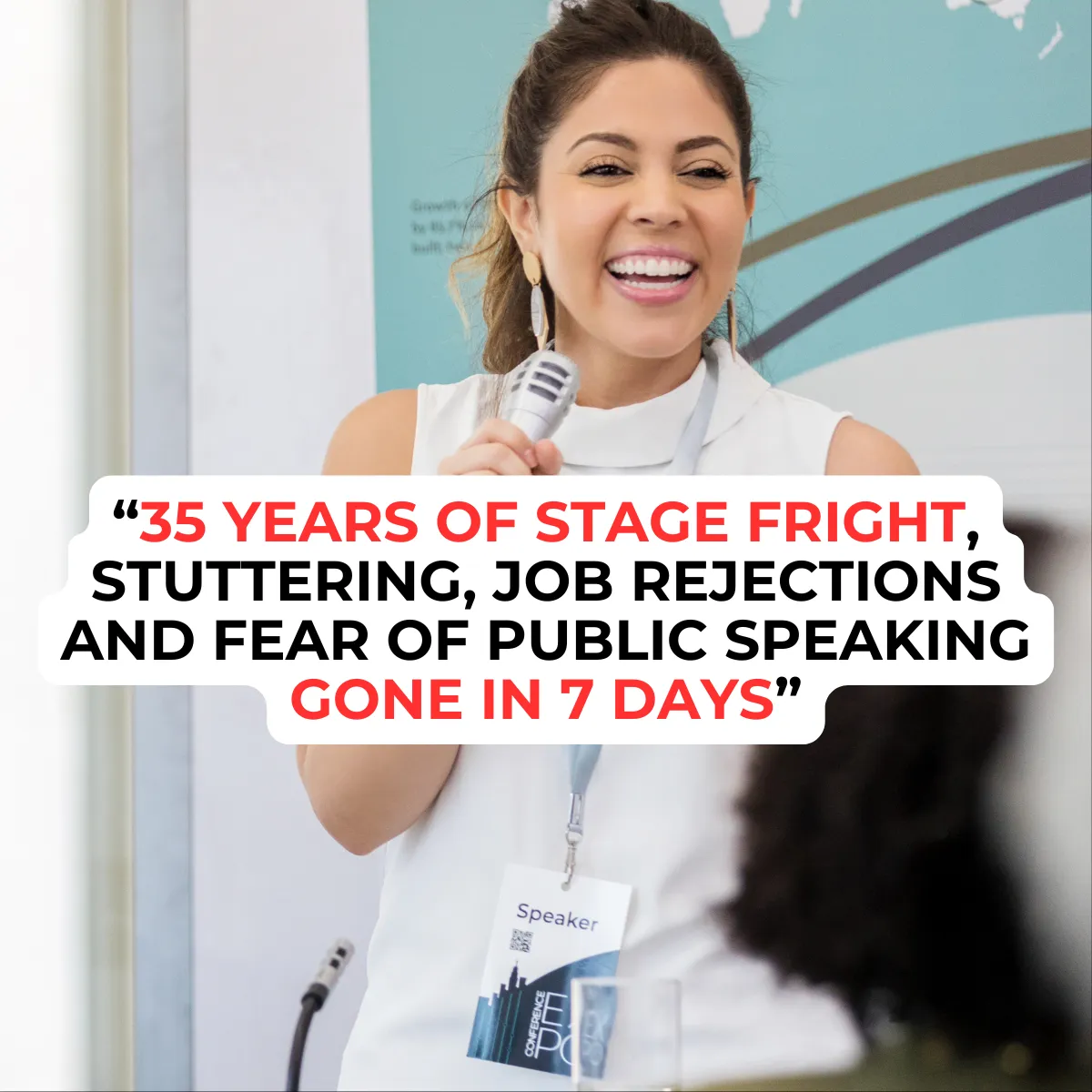
Begin your expansion today.
The right knowledge can change the way you think.
The right action can change the way you live.
Choose your guide and take your next step.

Integrity
Honesty and transparency.

Innovation
Fresh, creative solutions.

Excellence
Top-notch services.

The practical life-solutions library
for becoming your best self.
Expand your mind. Transform your life.
FOLLOW US


Copyright © 2026 I Am Expansion. All Rights Reserved.